Main menu

Effective leadership is defined by its capacity to create measurable impact and optimize resource utilization. This article presents a high-impact framework for bridging the execution gap, enabling organizations to accelerate decision-making and elevate operational performance. By leveraging creative problem-solving tools to design a flexible managerial action plan, organizations secure a reliable pathway toward achieving their overarching strategic goals.
Analysis Paralysis: Why Do Solutions Fail Before Implementation?
“The execution gap represents the disparity between what an organization aims to achieve and the actual results it delivers. This gap emerges due to analysis paralysis, as leaders become immersed in excessive details without establishing a clear managerial action plan, leading to wasted resources and weakened organizational trust.”
Solutions often lose their momentum and effectiveness before they ever see the light of day, remaining confined to paper. This stems from a complex set of interrelated factors that disrupt the managerial action plan, beginning with a flawed diagnosis that misidentifies the true problem, extending to a disconnect from the reality of available resources, and culminating in overly optimistic projections known as the “Planning Fallacy,” a concept introduced by Daniel Kahneman and Amos Tversky in 1979. Planners tend to underestimate time, costs, and risks. Moreover, rigidity and a lack of adaptability to unexpected changes transform strategic documents into administrative burdens rather than effective roadmaps, highlighting the need to reconceptualize planning as a dynamic, continuous process.
Symptoms of Analysis Paralysis in Middle and Senior Management
Analysis paralysis is a significant obstacle that disrupts executive operations. It manifests through managerial practices that freeze the administrative action plan and hinder its progress. These manifestations include the following:
- Excessive data scrutiny: Management levels spend prolonged periods examining data in pursuit of optimal solutions, generating hesitation in making decisive choices for fear of error or change.
- Endless meetings and deliberations: Valuable time is consumed in continuous discussions, shifting focus toward theoretical debate, and delaying the transition to tangible, practical steps.
- Overemphasis on precision: An excessive insistence on accuracy and detail becomes a constraint that weakens momentum, postponing the shift from planning to actual implementation.
- Operational teams left in limbo: Field teams remain in a state of anticipation and uncertainty, leading to a decline in initiative and innovation; both are essential for successful execution.
The Cost of Delay: How Inaction Exacerbates the Original Problem
Delays in activating solutions generate costs that extend far beyond financial losses, directly impacting the effectiveness of the managerial action plan and the organization’s future. These consequences include:
- The original problem becomes increasingly complicated and more difficult to resolve, potentially evolving into a persistent crisis over time.
- The time gap allows environmental and competitive variables to evolve, reducing the effectiveness and relevance of solutions by the time they are implemented.
- Resources are exhausted on short-term remedies and crisis management rather than directed toward immediate, root-cause resolution.
- Competitors with greater agility and initiative capitalize on opportunities that the organization fails to seize in time.
- The cumulative cost of waiting and indecision often exceeds the potential risks of initiating action—underscoring the necessity of moving forward and adjusting course during execution.

The Operational Bridge: Turning Root Causes into Action
“To close the execution gap, a managerial action plan must be built upon the identified root causes. Therefore:
- Assign a countermeasure to each root cause.
- Appoint a single accountable owner for every task.
- Establish a strict timeline.
This sequence transforms theoretical ideas into a tangible institutional reality”.
The transition from diagnosing challenges to achieving on-the-ground implementation requires a disciplined execution methodology. In strategic management literature, Robert S. Kaplan and David P. Norton emphasized the persistent execution gap that often separates strategic ambition from actual performance. Bridging this divide necessitates a well-structured managerial action plan that converts theoretical visions into measurable outcomes through procedural steps that ensure continuity, accountability, and sustained momentum.
How to Transform a Root Cause into an Executable Task?
Effective problem-solving begins by reframing challenges' causes and converting them into SMART tasks (specific, measurable, achievable, relevant, and time-bound). Translating a root cause into a concrete executive action directs focus immediately toward the desired outcomes.
This step is fundamental to building a robust managerial action plan grounded in clarity of assignment and well-defined timelines, ensuring that implementation proceeds according to plan and targets are achieved with efficiency and precision.
The RACI Matrix: Who Does What—and When?
Ensuring seamless operational flow requires precise allocation of roles and responsibilities. The RACI matrix provides a structured framework that defines who is Responsible, Accountable, Consulted, and Informed for each task. This clarity eliminates ambiguity, assigns clear ownership, and strengthens accountability.
By explicitly identifying the task owner and associated stakeholders, organizations foster a transparent work environment in which efforts are integrated and aligned, enabling each individual to understand their role within the broader organizational system.
Resource Allocation: Aligning Actions with Budget and Available Time
The success of initiatives requires providing the appropriate financial and time support to translate them into a tangible reality. Resource allocation is closely connected to the realism and feasibility of the managerial action plan, as it is essential to allocate the necessary budgets to each item and establish timelines that account for work teams' capacity. This ensures the sustainability of execution and the availability of the required tools to accomplish tasks with the expected quality and within the specified timeframe.
Strategic Alignment: From Plan to Impact
“Closing the execution gap relies on continuous measurement. Effective leaders do not wait until the end of a project to assess outcomes; they use interim performance indicators to ensure that the managerial action plan remains on track in addressing strategic deviations”.
Achieving tangible success requires a flexible shift from theoretical planning to practical implementation, supported by a robust measurement system that links data to decision-making. Root-cause resolution is verified by tracking stable performance indicators and growing positive results.
Feedback loops effectively capture real-time information to allow immediate course corrections, maintaining the vitality of the managerial action plan and ensuring its ongoing update to accommodate emerging changes and meet targets efficiently.
Execution Pitfalls: How to Prevent Your Plan from Failing?
Ensuring the continuity of the execution path and avoiding sudden setbacks requires high managerial vigilance and close monitoring to protect the managerial action plan from internal erosion.
It also ensures that available resources are utilized at maximum efficiency, maintaining a steady flow of accomplishments and transforming emerging challenges into genuine opportunities for growth and development. This can be achieved by adhering to the following principles:
- Direct institutional attention strictly toward output that directly contributes to strategic objectives, while avoiding busywork that drains energy through formalities lacking real added value.
- Mitigate natural fears and resistance to change by fostering effective communication and involving staff in solution design, generating a sense of ownership that encourages enthusiastic adoption of new transformations.
- Establish an accountability system linking outputs to their responsible parties, ensuring full commitment to executing solutions and motivating everyone to take responsibility for project success.
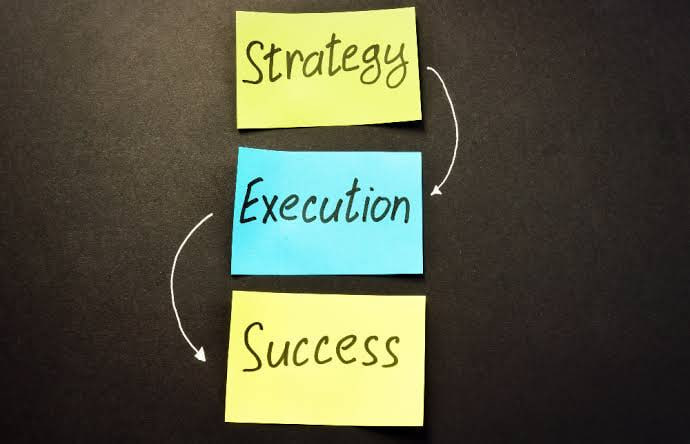
Ultimately, effective execution translates vision into tangible achievements. A well-structured managerial action plan serves as a powerful tool to bridge the gap between planning and delivery. You should immediately select a current challenge and apply the RACI matrix to it to ensure a strong start toward achieving strategic objectives with confidence and consistency.
Frequently Asked Questions
1. What is the difference between a strategic plan and a managerial action plan?
The strategy defines where we want to go, while the managerial action plan defines how we will get there, step by step.
2. How should I handle team deviations from execution?
Through short follow-up meetings (stand-up meetings) and by focusing on removing obstacles that prevent them from completing their tasks.
3. Can the plan be adjusted after it starts?
Yes, a successful action plan is a living document that evolves in response to field realities, as long as the ultimate goal remains unchanged.
This article was prepared by trainer Adnan Al Qadi, certified coach from Wolfa Academy.