Main menu

In a business world that’s being reshaped at breakneck speed, experience alone is no longer the safety net it once was. In fact, the very expertise a leader has built over two decades can quietly turn into a liability. It can either serve as a compass—or become an anchor—especially when leaders are confronted with challenges they’ve never faced before.
This is the quiet tension defining leadership today. It’s no longer about accumulating more answers; it’s about relearning how to ask better questions. To stay relevant amid shifting markets, rapid technological change, and evolving employee expectations, leaders must sharpen an entirely different skill set—one rooted in what’s often called the beginner’s mindset. Continuous learning is no longer a “nice to have.” It’s the price of admission.
Experience: Competitive Advantage or Hidden Trap?
Ask ten executives about experience, and you’ll likely get two opposing camps. Some see it as a leader’s greatest asset. Others see it as excess baggage. The truth lies somewhere in between.
The Traditional View
For decades, leadership was synonymous with mastery. The ideal leader was the ultimate authority—the person with the answers, the veteran who had “been there, done that.” Experience wasn’t just valued; it was currency. It legitimized decisions, commanded respect, and reinforced hierarchy.
Seasoned leaders earned trust precisely because they’d weathered storms before. Teams leaned on them during crises, confident that history would repeat itself and that past solutions would apply once again. Over time, experience sharpened judgment, built emotional intelligence, and taught leaders how to navigate complexity without panic. These qualities still matter—and they always will.
The New Business Reality
But today’s operating environment doesn’t reward muscle memory. It punishes it.
Volatility, uncertainty, and rapid disruption mean that problems rarely arrive in familiar packaging. They’re often novel, interconnected, and resistant to plug-and-play solutions. When leaders lean too heavily on yesterday’s playbook, they risk misreading today’s game.
This is where experience can backfire. Familiar solutions applied to unfamiliar problems can do real damage. Worse, they often trigger cognitive biases, causing leaders to filter new information through outdated assumptions. Signals that demand change get dismissed as noise.
Consider a leader shaped by a traditional industry who brushes off digital transformation as “the trend of the month.” That skepticism may feel grounded in experience—but it can quietly place the entire organization on thin ice.
The Real Issue Isn’t Experience—It’s Rigidity
Experience isn’t the villain. Inflexibility is.
The most effective leaders don’t discard their experience; they reframe it. They stop treating it like a rulebook and start using it as raw material for insight. Experience becomes a lens, not a leash.
Instead of relying on it for ready-made answers, they use it to ask sharper, more nuanced questions. They stay curious. They remain open. This shift—from certainty to inquiry—is what separates leaders who plateau from those who stay relevant well into the future. That balance will define leadership in 2026 and beyond.
Why a Growth Mindset Is No Longer Optional?
To navigate rising complexity, leaders must adopt a leadership strategy rooted in a growth mindset, not a fixed one. First introduced by psychologist Dr. Carol Dweck, this concept fundamentally changes how leaders view competence, effort, and failure.
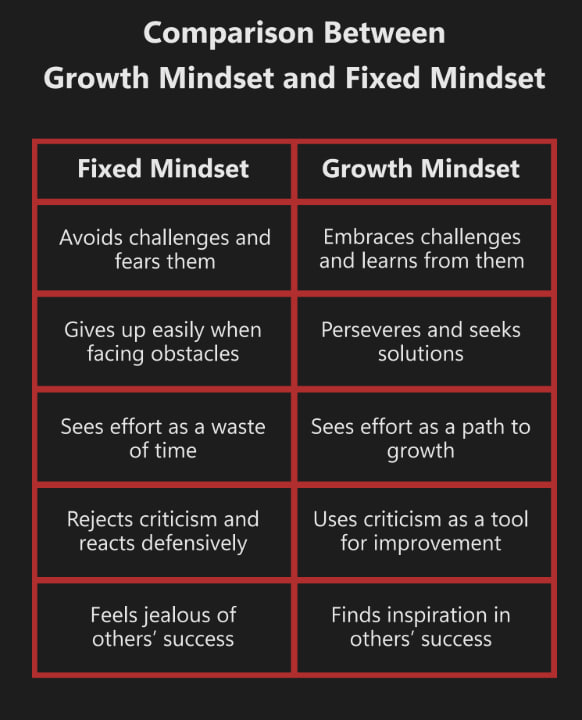
Here’s how the two mindsets diverge in practice:
- Fixed-mindset leaders avoid challenges that might expose limits. When things get hard, motivation drops fast. Effort feels like evidence of inadequacy rather than a path to mastery. Growth-mindset leaders, on the other hand, step into challenges deliberately. They see them as training grounds, not threats.
- Fixed-mindset leaders treat mistakes like reputational landmines. They grow defensive, sidestep risk, and delay tough decisions to protect their image. Growth-mindset leaders accept that missteps are part of the leadership job. They extract lessons, recalibrate, and move forward with stronger judgment.
- In a fixed mindset, leadership value is measured almost exclusively by outcomes—win fast, fail quietly. In a growth mindset, effort itself carries value. Progress matters. Capability compounds. Every experience—successful or not—adds to the leader’s range.
Redefining Failure: From Career Threat to Learning Signal
Leaders with a growth mindset don’t romanticize failure—but they don’t fear it either. They understand that innovation requires experimentation, and experimentation inevitably includes a few wrong turns.
Instead of sweeping mistakes under the rug or looking for someone to blame, they examine what went wrong and why. They course-correct openly and invite their teams into the learning process. The result is psychological safety—a workplace where people feel empowered to test ideas, speak up, and take smart risks without fear of public execution.
The Most Underrated Leadership Skill of 2026: Saying “I Don’t Know”
For many leaders, admitting uncertainty feels like stepping onto thin ice. Yet the strongest leaders understand a counterintuitive truth: not knowing can actually reinforce authority when handled well.
Here’s how to say “I don’t know” without losing credibility:
- Redefine competence. Leadership isn’t about knowing everything. It’s about knowing what matters—and recognizing when to seek insight beyond yourself.
- Model honesty. When leaders admit uncertainty, they normalize intellectual humility and invite others to do the same.
- Pair uncertainty with momentum. “I don’t know” should never be a full stop. Follow it with “Let’s figure it out” or “Who has perspective here?”
- Reward curiosity. Celebrate thoughtful questions, even when they expose gaps. A sharp question at the right moment is a sign of leadership maturity, not weakness.
"A growth mindset in leadership reflects the belief that intelligence, judgment, and leadership capability are developed through effort, feedback, and learning. Leaders who operate from this mindset welcome challenges, treat feedback as data—not a personal attack—and view growth as a continuous process rather than a fixed destination".
The New Leadership Toolkit: Thinking Sharper, Solving Smarter
The leadership skills that once guaranteed success are no longer enough. In today’s fluid, high-velocity world of work, leaders need an upgraded toolkit—one designed for ambiguity, not certainty. At the top of that toolkit sit two capabilities that now define leadership effectiveness: critical thinking and complex problem-solving.
Critical Thinking: Seeing Beyond the Obvious
- Critical thinking is no longer a “nice-to-have” intellectual trait—it’s a survival skill. At its core, it’s the ability to cut through information overload, challenge assumptions (including your own), and separate signal from noise. This goes far beyond analyzing dashboards or reviewing reports. It means questioning the premises behind decisions, evaluating evidence with intellectual honesty, and spotting cognitive biases before they quietly hijack judgment.
Leaders who think critically don’t accept conclusions at face value. They dig for root causes and ask uncomfortable but necessary questions:
- Why do we believe this to be true?
- What assumptions are we carrying forward without examining?
- What alternatives haven’t made it into the room?
In an environment where decisions must be fast, precise, and well-grounded, critical thinking becomes the backbone of future-ready leadership.
- Complex Problem-Solving: Moving beyond linear solutions toward systems thinking (System Thinking). Modern problems are rarely linear or driven by simple cause-and-effect relationships.
For example, declining sales may not stem solely from poor sales performance; it could be linked to changes in customer behavior, new competitor technologies, or even global economic factors. Here, complex problem-solving goes beyond linear thinking (“If A happens, then B follows”) and requires systems thinking.
Systems thinking is the ability to view interconnected parts of a system as a whole and understand how changes in one element affect others and the entire system. Leaders who master this skill can:
- Identify hidden patterns that others miss
- Anticipate unintended consequences, recognizing how a solution in one context may create a problem in another.
- Design comprehensive and sustainable solutions by addressing root causes rather than symptoms.
Why Continuous Learning Is the Engine Behind Both Skills?
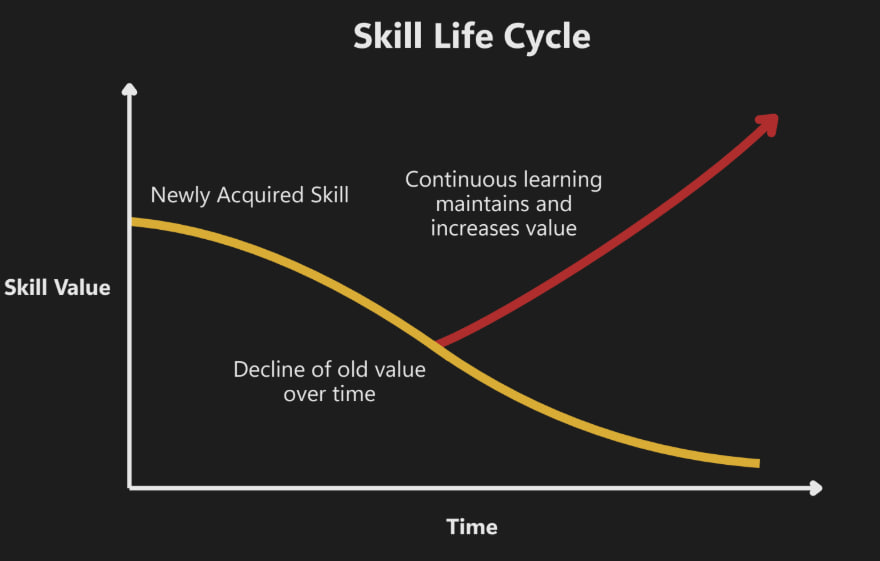
Critical thinking and complex problem-solving don’t sharpen themselves. Continuous learning is the fuel that powers both.
Every new idea, framework, or perspective expands a leader’s mental range. Exposure to diverse thinking models strengthens analytical depth and reduces blind spots. Whether through reading, executive education, workshops, or rigorous debate, learning adds new layers of insight.
Over time, this constant intellectual stretch builds a leader’s capacity to operate calmly inside complexity—to make sense of uncertainty without oversimplifying it.
The Power Balance: Blending Experience with New Learning
The objective isn’t to abandon experience—it’s to deploy it intelligently alongside ongoing learning. The most effective leaders master this balance, turning experience from a constraint into a compass.
Use experience to:
- Ask better questions. Experience doesn’t guarantee the right answers, but it sharpens a leader’s instinct for the right questions. Veteran leaders recognize patterns, anticipate risks, and uncover dimensions others may miss.
- Understand human dynamics. While technology evolves rapidly, human behavior changes slowly. Experience equips leaders to navigate motivation, conflict, trust, and influence—skills that remain largely timeless.
- Manage risk under pressure. A history of decisions—good and bad—creates judgment. Leaders can draw on past lessons to assess risk, build contingency plans, and steady teams during turbulence.
Use new learning to:
- Understand digital realities. Leaders don’t need to code—but they do need fluency. A working understanding of AI, big data, and cloud technologies is essential to making informed strategic decisions.
- Explore emerging business models. Value creation is being rewritten. Continuous learning opens the door to unconventional models and experimentation that traditional thinking might dismiss too early.
- Connect with younger generations. New generations bring different expectations around purpose, flexibility, and leadership. Learning helps leaders adapt their style and unlock genuine engagement.
Reverse Mentoring: Flipping the Learning Flow
One of the most effective ways to balance experience and learning is reverse mentoring.
Instead of knowledge flowing only top-down, seasoned leaders actively learn from younger or less tenured employees—particularly in areas like digital tools, social platforms, and emerging cultural norms.
The payoff is powerful: fresh perspectives, reduced hierarchy, stronger trust, and a culture where learning is mutual rather than positional. It sends a clear signal that insight isn’t tied to title—and that curiosity is a leadership value.

FAQs
1. I barely have time as it is—how am I supposed to keep learning?
Continuous learning doesn’t mean blocking off hours for formal training or enrolling in endless courses. Think in small, high-impact increments. Read one thoughtful article a day. Listen to a podcast during your commute or workout. Set aside 15 minutes a week to reflect on a single question: What did I learn that changed how I think?
Over time, these small inputs compound—much like interest—into real strategic insight.
2. How can I ask my team to change if I’m still learning myself?
That’s not a weakness—it’s your strongest leverage point. Transparency builds credibility. When you openly share what you’re learning—along with the missteps—you signal confidence, not uncertainty. You model a growth mindset in action, showing that learning is not a phase but a leadership standard. Teams are far more likely to evolve when they see their leader evolving in real time.
3. What’s the real difference between ordinary and complex problem-solving?
Ordinary problems come with familiar patterns and proven solutions. Experience usually gets you there efficiently.
Complex problems, on the other hand, live in gray zones. They’re interconnected, constantly shifting, and rarely come with a single “right” answer. Solving them requires experimentation, feedback loops, and ongoing adjustment—not certainty.
That’s precisely why continuous learning isn’t optional anymore; it’s the only way to stay responsive in a system that refuses to stand still.
Leadership Without a Finish Line
Leadership in the twenty-first century isn’t a destination—it’s a continuous cycle of learning, unlearning, and recalibration. The beginner’s mindset isn’t a rejection of experience; it’s a renewal of it.
It’s an invitation to replace certainty with curiosity, ego with openness, and rigid answers with better questions.
The leaders who will thrive going forward are those willing to admit they don’t have it all figured out, humble enough to learn from anywhere, and flexible enough to evolve with every new challenge. In a world that refuses to stand still, leadership without learning simply falls behind.
This article was prepared by trainer Ahmad Al Khatib, certified coach from Wolfa Academy.