Main menu
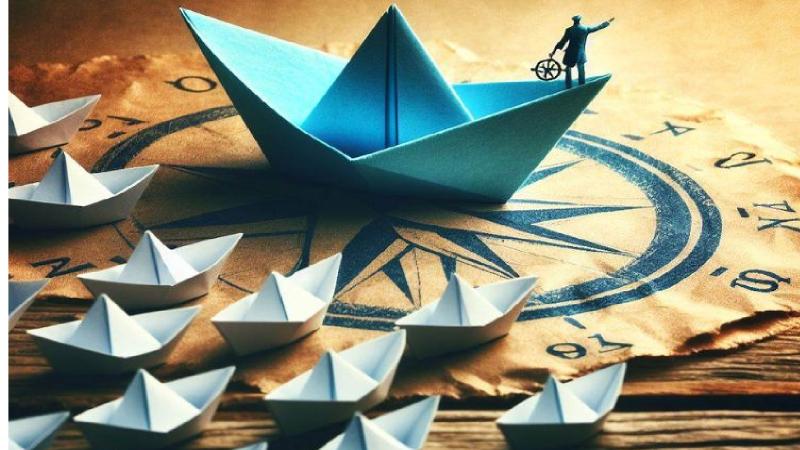
Have you ever seen a team's spark vanish, replaced by cold silence or empty friction? A report by "Gallup" titled "State of the Global Workplace" reveals that workplace conflict drains 2.8 hours weekly from employees—a multi-billion dollar hit to global productivity.
Yet, the "Storming Stage" is more than a setback; it is the ultimate test of human resilience. Without a leader’s empathy, bonds break. With it, these very crises become a bridge to maturity. Let’s explore how the best leaders turn turmoil into triumph."
Chaos of the "Storming Stage" and the Danger of Team Disintegration
Anxiety creeps in when everyone realizes that the rosy beginnings have ended, signaling a difficult confrontation with reality and differing temperaments.
The storming stage represents that critical moment where individuals lose their shared compass, and dialogue becomes an arena for self-assertion rather than an exchange of ideas; therefore, understanding this chaos is a necessity to save the team from fragmentation and loss.
We will now review the diagnostic aspects of this state and how to distinguish it accurately through the following points:
Realistic Definition
Enthusiasm gradually wanes during this stage, replaced by a form of silent or overt resistance that manifests in the following behaviors:
- The appearance of "Cliques" as fortresses where individuals seek refuge away from the team.
- Directly challenging the leader's authority or attempting to circumvent decisions.
- A sense of insecurity that drives individuals toward conflict instead of cooperation.
This behavior essentially traces back to the model of "Bruce Tuckman" published in 1965, which describes the storming stage as the inevitable clash that follows the forming stage; therefore, the lack of harmony in team dynamics during this period requires great wisdom to contain the situation.
The Language of Numbers
The damage of conflicts does not stop at emotions; rather, it translates into heavy material losses affecting organizational stability. The author "Daniel Dana" asserts in his book "Managing Conflict" that unresolved conflicts cause 65% of performance problems.
A study by the American Psychological Association revealed that stress reduces focus by 35%; therefore, a long time is wasted justifying personal positions instead of investing it in developing work teams. Thus, failing to solve problems in the work environment during this stage depletes the organization's resources rapidly.
Danger Signs
A leader must possess keen insight to distinguish between healthy professional disagreement and the beginning of a destructive storm by monitoring the following:
- The shift of the discussion from criticizing ideas and plans to direct personal attacks.
- The absence of transparency and the dominance of whispering and maneuvering in work corridors.
- A noticeable decline in the level of mutual trust between colleagues.
Leading transformation in these circumstances requires courage to face these signals early, because ignoring them means letting the storming stage consume all future opportunities for success.
"The Storming stage is the second stage in Tuckman's model for team development, characterized by the emergence of conflicts, resistance to directions, and members competing for status. This is considered the most dangerous stage, as studies indicate that most teams stumble here and fail to reach the "Performing" stage if the situation is not addressed".

Why Do We Clash Instead of Create?
Behind closed doors, workplace friction isn’t just a random occurrence; it is a muffled plea for the recognition and clarity that leadership failed to provide.
These tensions flare up when our basic human needs pull against the demands of collective success, turning the "Storming Stage" into a battlefield that drains our spirits long before it wears down our bodies.
Let’s look at the deep-seated reasons why a team’s heartbeat shifts from the rhythm of achievement to the noise of argument:
1. The Fog of Role Ambiguity
Nothing erodes a person’s confidence like not knowing where they stand. When people lack a clear sense of their own impact, they either overstep into others' territory or retreat in fear of failure.
This confusion is the spark that sets the "Storming Stage" ablaze. According to the Institute of Leadership & Management, this lack of clarity is the primary catalyst for team breakdown.
2. Personality Clashes
When an analytical mind obsessed with detail meets a visionary driven by speed, the result isn't always synergy; it’s often a deep human rift. In the "Storming Stage," these differences transform from a diverse palette into a constant collision. As Thomas Erikson captures in Surrounded by Idiots, when we fail to understand each other’s inherent nature, the office starts feeling like a prison of mutual frustration.
3. The Silence of Psychological Danger
Perhaps the heaviest burden is the fear of speaking up. When voices are suppressed, and disappointments pile up, they inevitably explode during the "Storming Stage," leaving team members like isolated islands, guarded and suspicious. Google’s famous Project Aristotle proved that without psychological safety, team spirit dies—and a culture of blame takes its place.
"Storming-stage conflicts aren’t accidental. They are the fallout of structural gaps: vague roles, clashing temperaments, and a lack of established Team Norms. Without these guardrails, the workplace becomes a breeding ground for toxic competition".
The Price of Leadership Silence: What Happens if the Storm is Ignored?
When a leader stays on the sidelines during a conflict, they aren't being neutral—they are effectively signing off on the destruction of the team's hard-earned trust.
Turning a blind eye to these gathering clouds allows the "Storming Stage" to spiral, turning shared dreams into the ashes of missed opportunities. Here is what that silence actually costs:
1. A Toxic Culture
Without intervention, a workplace slowly decays into a theater of politics and hidden agendas. This toxicity drives the best talent to flee toward environments that value their humanity. Look at Uber, where unresolved friction and a lack of safety led to a mass exodus of brilliance. In a prolonged "Storming Stage," the most creative minds don't stay to fight; they simply leave.
2. Decision Paralysis: Losing the Compass
When personal drama takes center stage, work stops moving. This paralysis makes any real progress impossible. We saw this with Nokia, where a "silent storm" of fear and avoided confrontation froze decision-making at the highest levels, eventually leading to a historic market collapse.
3. The Decay of Quality and Trust
The chaos inside a team eventually bleeds out into their work. Deadlines slip, quality fades, and the lack of human harmony leads to a broken product. When internal problem-solving fails, the client’s trust follows suit.
What’s left is a hollow version of what the team could have achieved if only there had been a steady hand to guide them through the storm.
"Ignoring the "Storming Stage" is a recipe for disaster: plummeting productivity, high employee Turnover, and a culture where blame is the default setting. Left unchecked, the storm doesn't just pass; it breaks the team for good".

Mastering the Art of Containment and Guidance
When the pressure peaks, a seasoned leader doesn’t just brace for impact; they adjust the sails. It’s a quiet recognition that a fractured team needs a steady anchor of purpose. To turn this turbulence into disciplined momentum, a leader must focus on three core shifts:
1. Re-aligning
Your job is to lift the team out of the weeds. By refocusing on the "why," you provide a shared human purpose that makes petty squabbles feel small. It’s about elevating the conversation from daily friction to collective legacy.
2. Team Charter
Ambiguity is the enemy. A formal charter acts as a social contract, defining how we disagree and how we move forward. For a team under fire, these boundaries provide the psychological breathing room needed to stop being defensive and start being productive.
3. The Facilitator Mindset
In the heat of the storm, stop commanding and start listening. A leader at this stage is a shock absorber—someone who soaks up the tension and rebuilds the psychological safety required for creativity to breathe again.
Case Study: How Pixar Refines Friction
Pixar doesn’t avoid conflict; they harness it through the Braintrust. The secret? Radical candour where the work is stripped bare, but the person is always protected. By choosing "Honest Truth" over polite silence, they rescued Toy Story from the brink, proving that friction, when handled with grace, is the fuel for greatness.
"Survival depends on containment. Draft a Team Charter, act as a neutral facilitator, and keep the "why" front and centre to pull your people out of the chaos".
The Roadmap Out: Practical Recovery
Vision is nothing without the tools to mend broken trust. To bridge the gap between "Storming" and "Performing," you need deliberate, human-centric actions that heal the cracks before they become canyons:
1. Regulated Candour
Create a "venting" space where frustrations can be aired without burning the house down. By chairing these sessions, you ensure that honesty is used to clear the air, not to settle scores.
2. Bridging the Human Gap
Frameworks like DiSC or MBTI are more than just HR tools—they are bridges to empathy. When a team member understands that a colleague’s "difficulty" is just a different wiring, resentment turns into collaboration. You stop fighting the person and start respecting the perspective.
3. The Power of Small Wins
Trust is rebuilt through shared success, however small. Target an easy victory to remind the team how it feels to win together. These "quick wins" act as a psychological reset button for a weary group.
4. Surgical Intervention
Some fires must be put out in private. One-on-one mediation removes the "audience" and allows for a dignified resolution. It stops personal disputes from festering into team-wide factions.
"To exit the storm, lead with empathy. Set clear rules, use personality insights to bridge the gap, and bank small wins to restore faith. Early, private intervention is the only way to stop a spark from becoming a forest fire".

Why Conflict is Sometimes the Cure?
Friction isn't always a warning light; often, it’s the spark that illuminates the path to innovation. If handled with empathy and wisdom, the Storming stage becomes the laboratory where true character is forged, and potential is unlocked from behind the mask of polite formalities. Here is how this tension builds an invincible team:
1. The Power of Constructive Conflict
Teams that master the art of "elegant disagreement" produce ideas that far outshine the dullness of Groupthink. Healthy debate breaks the stalemate and turns conflict management into a bridge toward unconventional solutions. This diversity ensures you never fall into the trap of comfortable consensus, which usually hides a lack of vision.
2. Building Team Resilience
A team that survives the storm develops a psychological immunity. They emerge more robust, capable of weathering market crises and external pressures that would break others. Solving problems in the workplace during this period builds a deep, mutual trust, making the group more cohesive and ready to deliver under the harshest conditions.
"Conflict isn't inherently negative. Managed well, it evolves into "constructive friction" that births innovation and spots risks early. Successfully navigating the storm builds the team’s "social muscle," leading to the Norming stage where resilience and unity become the new standard".
Frequently Asked Questions
1. How long does the Storming stage usually last?
There is no fixed clock. It can last weeks or months, depending on the maturity of the members and the wisdom of the leader. The real danger isn’t the duration, but the risk of getting stuck there forever.
2. Should I, as a leader, try to prevent the storm from happening?
Suppressing the storm only leads to "Artificial Harmony." The storm is necessary to clear the air, set expectations, and build genuine trust. Your role is to guide the storm, not to stop it.
3. When should I consider removing a team member during this phase?
Only when a member becomes a constant source of toxicity and refuses to respect the team’s boundaries despite repeated coaching. In these cases, removal is a surgical necessity to protect the health of the collective.
Final Thoughts
The Storming stage is the ultimate litmus test for any team. It is either the cause of collapse or the golden gateway to maturity and excellence. By embracing containment strategies and clarifying roles, you turn exhausting disputes into the fuel for collective resilience.
Leaders must adopt these solutions immediately to ensure that every human challenge becomes an inspiring success story in the organisation’s history.
This article was prepared by trainer Alaa Manla Ahmad, certified coach from Wolfa Academy.